
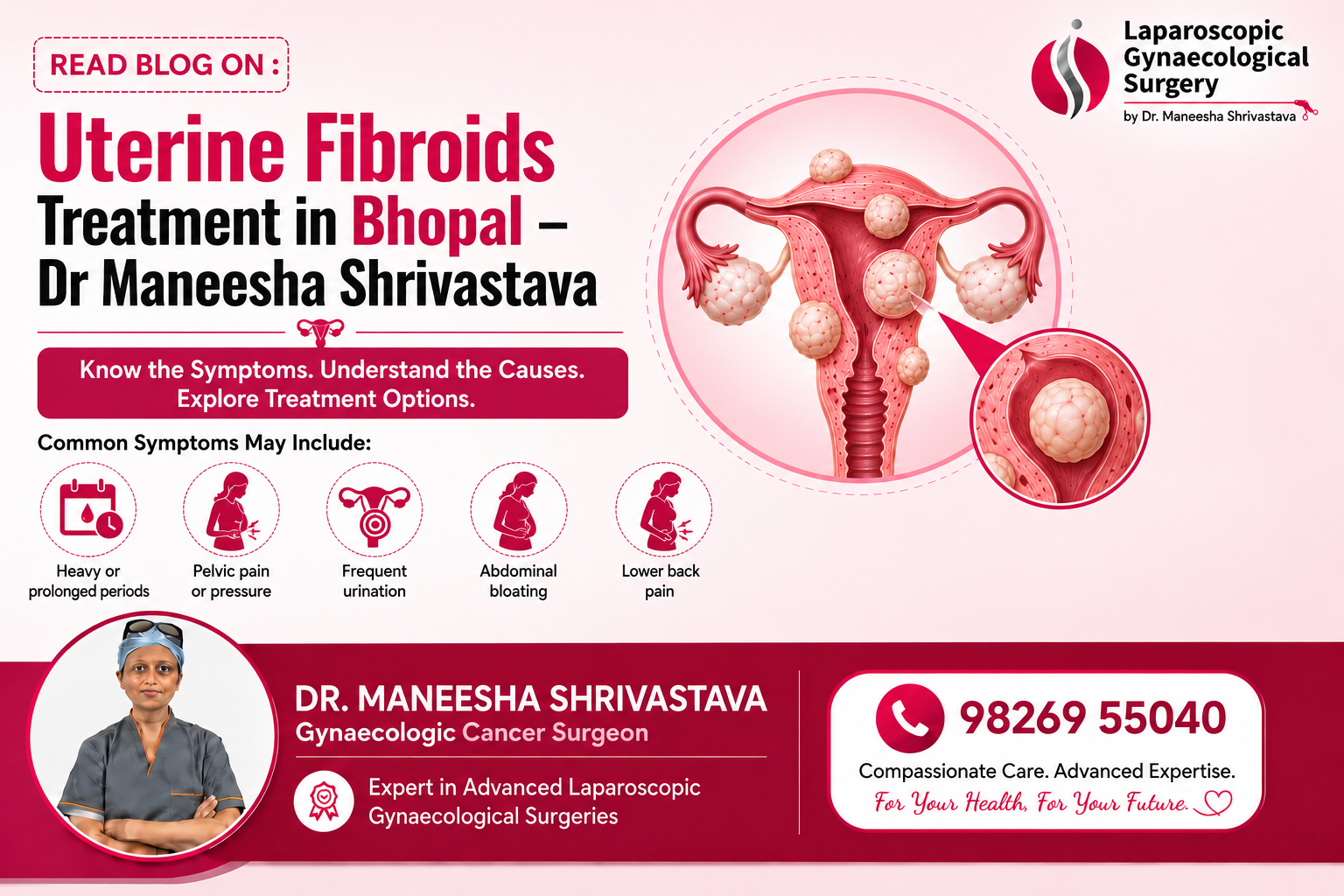
Uterine fibroids are one of the most common gynecological conditions affecting women during their reproductive years. Many women may have fibroids without even realizing it, while others experience symptoms that can significantly impact their daily life, fertility, and overall health. Heavy menstrual bleeding, pelvic pain, abdominal swelling, frequent urination, and fertility challenges are some of the common problems associated with fibroids. Although fibroids are usually non-cancerous, they should never be ignored, especially when symptoms begin to affect quality of life.
If you are searching for uterine fibroids treatment in Bhopal, consulting an experienced gynecologist is essential for proper diagnosis and personalized treatment planning. Dr. Maneesha Shrivastava, a highly experienced laparoscopic gynecologist with over 22 years of clinical experience, provides advanced and minimally invasive treatment for uterine fibroids and various gynecological conditions in Bhopal. Her patient-focused approach and expertise in laparoscopic surgery help women achieve effective treatment with faster recovery.
Best Gynecologist in Bhopal for Uterine Fibroids Treatment
Women experiencing abnormal menstrual bleeding, pelvic discomfort, or fertility concerns often require specialized gynecological evaluation.
Dr Maneesha Shrivastava is widely recognized for her expertise in:
- Uterine fibroids treatment
- Laparoscopic gynecological surgery
- Ovarian cyst treatment
- Endometriosis management
- Infertility evaluation
- Hysteroscopy procedures
- Menstrual disorder treatment
- Uterus-related conditions
- Minimally invasive gynecological surgery
Her commitment to advanced women’s healthcare has made her a trusted choice for patients across Bhopal and nearby areas.
About Dr Maneesha Shrivastava
Dr Maneesha Shrivastava leads Laparoscopic Gynaecological Surgery Bhopal, a center dedicated to advanced and compassionate women’s healthcare.
Why Patients Trust Dr Maneesha Shrivastava
- 22+ Years of Clinical Experience
- Advanced Laparoscopic Technology
- Minimally Invasive Surgical Expertise
- Comprehensive Women’s Healthcare
- Personalized Treatment Plans
- Patient-Centered Approach
- Focus on Safety and Faster Recovery
Her goal is to help women receive accurate diagnosis, effective treatment, and improved quality of life through modern gynecological care.
What Are Uterine Fibroids?
Uterine fibroids are non-cancerous growths that develop within or around the uterus. They are made up of muscle and fibrous tissue and can vary significantly in size. Some fibroids may be as small as a seed, while others can grow large enough to enlarge the uterus.
Fibroids are also known as:
- Leiomyomas
- Myomas
- Fibromyomas
Although they are generally benign, fibroids can cause significant symptoms depending on their size, location, and number.
How Common Are Uterine Fibroids?
Fibroids are extremely common. Studies suggest that many women develop fibroids during their reproductive years, although not all experience symptoms. Women between the ages of 30 and 50 are most commonly affected. Many patients seeking gynecological treatment in Bhopal discover fibroids during routine ultrasound examinations.
Why Do Uterine Fibroids Develop?
The exact cause of fibroids is not completely understood.
However, several factors are believed to contribute to their development.
Hormonal Influence
Estrogen and progesterone play a major role in fibroid growth.
These hormones stimulate the uterine lining during each menstrual cycle and may also encourage fibroid development.
Fibroids often grow during reproductive years and may shrink after menopause when hormone levels decline.
Genetic Factors
Family history can increase the likelihood of developing fibroids. If a mother or sister has fibroids, the risk may be higher. Researchers believe certain genetic changes influence fibroid formation.
Growth Factors
Certain substances that help the body maintain tissues may contribute to fibroid growth. These growth factors can affect how uterine muscle cells multiply and develop.
Obesity and Lifestyle Factors
Being overweight may increase estrogen production, which can contribute to fibroid growth. Lifestyle factors such as poor diet and lack of physical activity may also play a role.
Types of Uterine Fibroids
Fibroids are classified based on their location.
Intramural Fibroids
These develop within the muscular wall of the uterus. They are among the most common types.
Submucosal Fibroids
These grow inside the uterine cavity. They can significantly affect fertility and cause heavy bleeding.
Subserosal Fibroids
These develop on the outer surface of the uterus. Large subserosal fibroids may press on nearby organs.
Pedunculated Fibroids
These fibroids grow on stalk-like structures attached to the uterus. They may cause pain if they twist.
Symptoms of Uterine Fibroids
Many women have fibroids without symptoms.
However, when symptoms occur, they may include:
- Heavy menstrual bleeding
- Prolonged periods
- Pelvic pain
- Pelvic pressure
- Frequent urination
- Constipation
- Lower back pain
- Abdominal swelling
- Pain during intercourse
- Difficulty becoming pregnant
The severity of symptoms often depends on fibroid size and location.
Heavy Periods and Fibroids
One of the most common reasons women seek fibroid treatment in Bhopal is excessive menstrual bleeding.
Heavy periods can lead to:
- Fatigue
- Weakness
- Iron deficiency anemia
- Reduced quality of life
Persistent heavy bleeding should always be evaluated by a gynecologist.
Can Fibroids Cause Infertility?
Yes, certain fibroids can affect fertility.
Fibroids may interfere with:
- Implantation of embryos
- Sperm movement
- Uterine cavity shape
- Pregnancy maintenance
Submucosal fibroids are particularly associated with fertility challenges.
Women struggling to conceive should undergo proper gynecological evaluation.
Can Fibroids Affect Pregnancy?
Fibroids may increase the risk of:
- Miscarriage
- Preterm labor
- Abnormal fetal position
- Cesarean delivery
However, many women with fibroids have healthy pregnancies.
Regular monitoring is important.
How Are Uterine Fibroids Diagnosed?
Accurate diagnosis helps determine the best treatment approach.
Medical History
Assessment of symptoms and menstrual patterns.
Physical Examination
Evaluation of pelvic abnormalities.
Ultrasound
The most commonly used imaging test for fibroids.
MRI Scan
Provides detailed information about fibroid size and location.
Hysteroscopy
Allows direct visualization of the uterine cavity.
When Should You See a Gynecologist?
Consult a gynecologist if you experience:
- Heavy periods
- Severe menstrual pain
- Pelvic pressure
- Difficulty conceiving
- Frequent urination
- Unexplained abdominal enlargement
Early diagnosis can prevent complications.
Treatment Options for Uterine Fibroids in Bhopal
Treatment depends on:
- Fibroid size
- Number of fibroids
- Symptoms
- Age
- Fertility goals
Dr Maneesha Shrivastava develops individualized treatment plans based on each patient’s needs.
Non-Surgical Treatment for Fibroids
Some patients may benefit from:
- Hormonal medications
- Iron supplementation
- Symptom management
- Regular monitoring
Smaller fibroids with mild symptoms may not require immediate surgery.
Advanced Laparoscopic Fibroid Surgery in Bhopal
When symptoms become significant, surgery may be recommended. Dr Maneesha Shrivastava specializes in advanced laparoscopic gynecological surgery.
Benefits of Laparoscopic Fibroid Surgery
- Smaller incisions
- Less pain
- Faster recovery
- Reduced blood loss
- Shorter hospital stay
- Better cosmetic results
Minimally invasive surgery has transformed fibroid treatment for many women.
What Is Myomectomy?
Myomectomy involves removing fibroids while preserving the uterus. This option is often recommended for women who wish to maintain fertility.
Benefits include:
- Symptom relief
- Improved fertility potential
- Preservation of reproductive function
When Is Hysterectomy Recommended?
In some cases, hysterectomy may be considered when:
- Fibroids are very large
- Symptoms are severe
- Childbearing is complete
- Other treatments have not been successful
Treatment decisions are always individualized.
Why Choose Laparoscopic Surgery for Fibroids?
Compared to traditional open surgery, laparoscopic procedures offer:
- Faster return to daily activities
- Reduced postoperative discomfort
- Smaller scars
- Lower infection risk
- Better recovery experience
Dr Maneesha Shrivastava has extensive expertise in minimally invasive gynecological surgery.
Why Women Choose Dr Maneesha Shrivastava in Bhopal
Patients trust Dr Maneesha Shrivastava because of:
- 22+ years of experience
- Expertise in laparoscopic gynecology
- Advanced surgical technology
- Comprehensive women’s healthcare
- Patient-focused care
- Individualized treatment planning
- Commitment to safety and recovery
Her goal is to provide effective treatment while ensuring patient comfort and confidence.
FAQs – Uterine Fibroids Treatment in Bhopal
1. Which treatment is best for uterine fibroids?
The best uterine fibroids treatment in Bhopal depends on fibroid size, location, number, symptoms, age, and fertility plans. Treatment may include medicines, monitoring, myomectomy, or other procedures.
2. How risky is fibroid surgery?
Fibroid surgery is generally considered safe when performed after proper evaluation. The risks depend on the type of surgery, fibroid size and location, and overall health.
3. What is the cost of fibroid treatment?
The cost of fibroid treatment in Bhopal varies depending on the number and size of fibroids, treatment method, investigations, and hospital-related factors.
4. How much does a 7 cm fibroid weigh?
The weight of a 7 cm fibroid cannot be determined from size alone. Its weight depends on its shape, tissue density, and exact dimensions.
5. Can uterine fibroids cause infertility?
Some fibroids, particularly those affecting the uterine cavity or significantly changing the shape of the uterus, may affect fertility or pregnancy outcomes.
6. Can fibroids shrink naturally?
Fibroids may shrink naturally, particularly after menopause when hormone levels decrease. However, symptomatic or growing fibroids may require medical evaluation.
7. When should fibroids be treated?
Treatment may be considered when fibroids cause heavy menstrual bleeding, pelvic pain, pressure symptoms, anemia, fertility problems, or significant growth.
8. Is laparoscopic surgery suitable for fibroids?
Laparoscopic surgery may be suitable for selected patients depending on fibroid size, number, location, and other individual factors. A laparoscopic gynecologist in Bhopal can evaluate whether minimally invasive surgery is appropriate.
9. Can fibroids come back after surgery?
Fibroids can develop again after surgery because myomectomy removes existing fibroids but does not necessarily prevent new fibroids from forming.
10. Who should I consult for uterine fibroids in Bhopal?
A gynecologist can assess symptoms and imaging reports and recommend an appropriate treatment approach. Dr Maneesha Shrivastava provides evaluation and management of uterine fibroids and minimally invasive gynecological surgery in Bhopal.
Conclusion – Uterine Fibroids Treatment in Bhopal
Uterine fibroids are common but can significantly affect a woman’s health, fertility, and quality of life when symptoms become severe. Understanding why fibroids develop and recognizing early symptoms can help ensure timely diagnosis and effective treatment.
If you are experiencing heavy menstrual bleeding, pelvic pain, abdominal swelling, fertility concerns, or other symptoms related to fibroids, consult Dr Maneesha Shrivastava for expert uterine fibroids treatment in Bhopal. With advanced laparoscopic technology, extensive experience, and a patient-centered approach, she provides comprehensive care designed to help women achieve better health and long-term relief.